

Beyond the Flashlight: How AI, Drones, and Robotics Are Reshaping Perimeter Security
For decades, perimeter security in the utility sector has relied on boots-on-the-ground guards, passive camera systems, and physical fencing. But as threat vectors grow more complex—and the cost of human error becomes more acute—utilities are rethinking what it means to secure a site. The answer? A shift beyond the flashlight, toward a more intelligent, technology-driven approach to security.
To unpack this transition, I sat down with Kevin Speed, Senior Solutions Systems Architect for iEnet’s Critical Infrastructure Division. With a background in industrial automation, Kevin brings a pragmatic lens to the application of AI, robotics, and digital twin technology in utility environments.
“What intrigued me was how underdeveloped the utility space was compared to industrial automation, which has mature ecosystems and high ROI,” Kevin explained. “That gap creates huge opportunities.”
Technology That Sees the Whole Picture
One of the key enablers Kevin pointed to is digital twin technology—a 3D contextual model of a site that allows real-time understanding of perimeter environments.
“Once you have a digital twin, your security posture becomes dynamic,” Kevin noted. “You can map and manage the site in a way that’s automated and intelligent.”
This matters because most traditional perimeter intrusion systems are static and expensive to scale. By contrast, digital twin integration allows for more precise detection, better resource allocation, and real-time response coordination.
The Human Factor—and Its Limits
Utility security has long depended on personnel patrolling vast, often remote sites. But that model is becoming increasingly unsustainable due to high turnover, safety risks, and limited coverage.
“A guard can only be in one place at a time,” Kevin said. “A properly layered intrusion system can monitor 24/7, 365—and respond in ways a human simply can’t.”
That doesn’t mean humans are being replaced altogether. Rather, roles are shifting from reactive patrols to higher-value decision-making supported by intelligent systems.
Drones Before Dogs
There’s a lot of buzz around robot dogs and AI-powered sentries, but Kevin was quick to clarify the adoption curve.
“Drones are more relevant right now,” he said. “They can respond to incidents, patrol perimeters proactively, and give operators and law enforcement a clear picture of what’s happening—all without putting a person at risk.”
In fact, drones paired with digital twins are already proving useful for daily inspections, detecting changes in terrain, and identifying weak points in fencing—use cases that go far beyond response alone.
Why Utilities Struggle to Adopt
So why isn’t this tech everywhere yet?
“Utilities aren’t tech developers,” Kevin told me. “Their core is risk assessment and response—not building new security programs. And even large utilities don’t always know what’s coming down the vendor roadmap.”
That’s where firms like iEnet come in. Unlike traditional consultants who stop at the recommendations stage—or manufacturers who just want to move boxes—we deliver integrated programs. We work side-by-side with clients to define requirements, vet real-world solutions, and close the gap between what’s available and what’s needed.
“We blur the lines between consulting, engineering, and delivery,” Kevin said. “And that’s what’s required to de-risk innovation in this space.”
Affording the Future
While some assume AI-powered security comes with a hefty price tag, Kevin stressed that the biggest cost isn’t the tech—it’s the infrastructure.
“It’s not cheap to build a security pole at every substation,” he noted. “So we focus on modular, solar-powered, cellular-connected systems that don’t rely on fixed infrastructure.”
That flexibility makes wide-scale adoption feasible, even for smaller utilities. We also help clients convert operational expenditures (like ongoing SaaS fees) into capitalized investments—a model utilities are more accustomed to.
What Comes Next?
So will we see fully automated utility sites in our lifetime?
“I think it’s inevitable,” Kevin said. “There may still be a guard at the gate for high-criticality sites, but their role will be elevated. Patrols will become obsolete.”
To get there, Kevin emphasizes the importance of cross-departmental innovation programs.
“Don’t wait for a one-size-fits-all solution. Roadmap specific strategies for substations, gas, hydro—because the cost of getting it wrong later is far higher than investing smartly upfront.”
That’s the mindset we’re championing at iEnet: bold enough to rethink, disciplined enough to de-risk, and agile enough to deliver.
The Take-a-way
More Headlines from iEnet
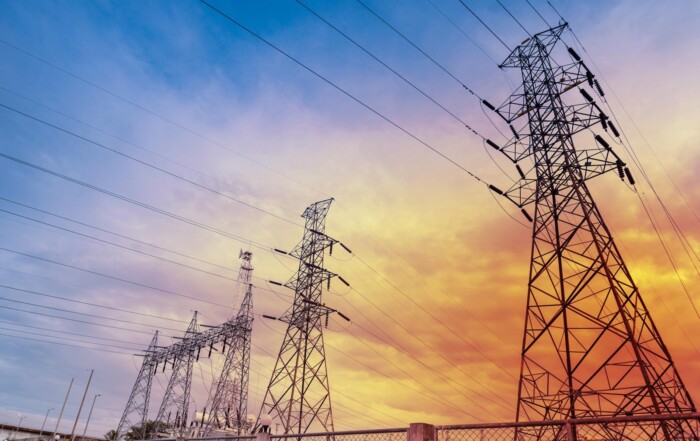
Beyond the Flashlight: How AI, Drones, and Robotics Are Reshaping Perimeter Security
Beyond the Flashlight: How AI, Drones, and Robotics Are Reshaping Perimeter Security For decades, perimeter security in the utility sector has relied on boots-on-the-ground guards, passive camera systems, and physical fencing. But as threat
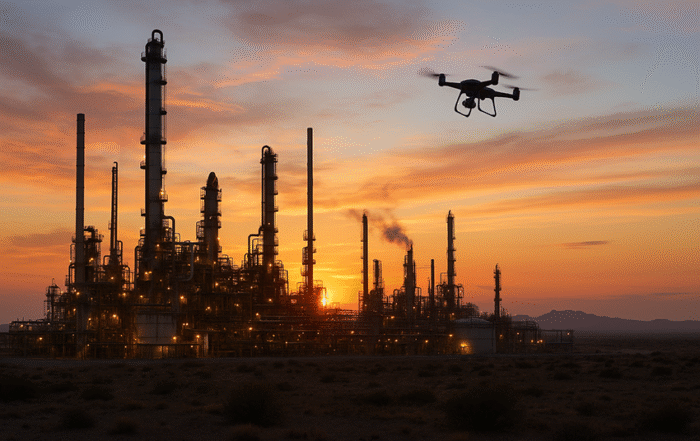
Securing Oil & Gas in the Age of Evolving Threats
Securing Oil & Gas in the Age of Evolving Threats When most people think of oil & gas security risks, they picture Hollywood-style explosions. The reality is far less cinematic—and far more complicated.
The Challenges of Navigating Compliance and Buying Down Risk
The Challenges of Navigating Compliance by Buying Down Risk In today's dynamic energy landscape, private utility providers face immense pressure to comply with stringent regulatory standards while ensuring the security of their operations. The